:format(webp))
What Australian Homeowners Should Know Before Investing in Ducted Air Conditioning
Before investing in ducted air conditioning, you need to consider whether your home can accommodate the ductwork, how the system should be sized and zoned, what installation and electrical work may be needed, and how energy efficiency will affect running costs.
Making the right choices upfront can help your system keep your home comfortable without using more energy than necessary.
Read on to learn how ducted air conditioning works, why reverse-cycle systems remain popular in Australia, what influences installation and running costs, and how to decide whether ducted air conditioning is the right fit for your home.
Why Ducted Air Conditioning Remains a Popular Choice
Ducted air conditioning is one of those home upgrades you feel more than you see. The vents sit quietly overhead, while one central system works to heat or cool several rooms at once.
For Australians building, renovating, or replacing several ageing units, that simplicity is a big part of the appeal. Modern ducted AC units keep multiple indoor units off the walls, and zoning lets you direct conditioned air towards the parts of the home being used. Reverse-cycle models also cover heating and cooling in one system.
When planned well, you gain more control over comfort across your home, with a clean finish that blends quietly into each room.
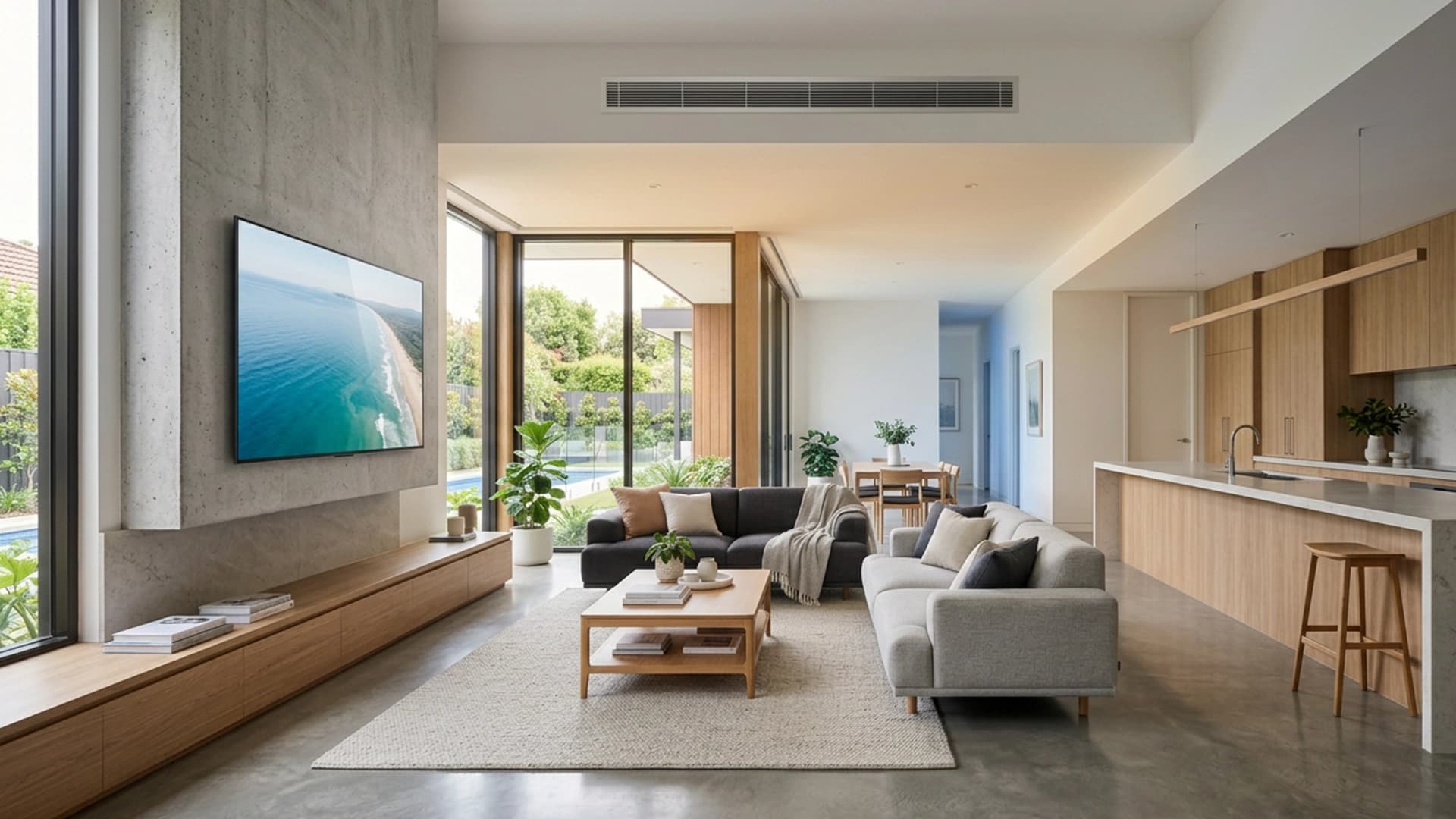
What Is a Ducted Air Conditioning System?
A ducted system has an indoor unit, usually positioned in the roof space or beneath the floor, and an outdoor unit. A return-air grille draws air from inside your home. The system filters and heats or cools the air before sending it through insulated ducts to vents in different rooms.
Nearly all of the equipment stays out of sight, but the layout is really important to get right. Duct size, outlet placement, and airflow can all affect comfort, efficiency, and noise. Careful design helps each area receive the air it needs without noticeable temperature swings.
Zones divide the home into separate areas that you can control. You might condition the living spaces during the day, then switch it over to the bedrooms at night. The level of control available will depend on the system, zone design, sensors, and controller you choose.
Split system air conditioners are designed to condition one room or open-plan area through a wall-mounted indoor unit. Ducted AC units distribute air to several areas through one central indoor system.
A split system may suit you if only one or two rooms need air conditioning, whereas ducted air conditioning may be the better fit when you regularly use more of the house and prefer discreet vents.
Why Reverse-Cycle Ducted Air Conditioning Is Popular in Australia
Reverse-cycle air conditioning gives you cooling and heating through the same system. During summer, it draws heat from inside your home and releases it outside. When the temperature drops, the process reverses and transfers available heat from outside into the home.
This type of heat transfer uses a lot less electricity than producing it directly. The Australian Department of Climate Change, Energy, the Environment and Water notes that reverse-cycle air conditioners can achieve efficiencies of 300% to 600% because they transfer heat rather than create it.
Modern ducted systems have other features that also affect comfort and energy use.
Inverter technology: Traditional fixed-speed systems repeatedly switch on at full output and off once the set temperature is reached, which can use a lot more electricity. An inverter system adjusts its output to maintain comfort more efficiently, reducing energy costs.
Zoning: Zoning lets you condition the areas being used without automatically heating or cooling every room. Your zone layout should reflect how you use your home throughout the day.
Climate-zone performance: The Zoned Energy Rating Label compares heating and cooling efficiency across Australia's hot, average, and cold climate zones. It also shows estimated annual energy use for similar-capacity models.
Your location will also influence your choice of ducted AC unit. When comparing ducted AC in Brisbane, you may focus more on cooling performance and humidity control. If you're researching ducted aircon in Sydney, you may want a stronger balance between summer cooling and winter heating.
Altogether, these details provide a clearer picture of a ducted reverse cycle air conditioner cost over time, rather than focusing only on the initial quote.
What Influences the Cost of a Ducted Air Conditioning System?
There's no standard figure that suits every Australian home. Ducted reverse cycle air conditioner costs depend on the system itself, the work required to install it, and how your home is designed.
Four areas tend to shape the quote most.
The Size and Cooling Load of Your Home.
A larger house will need more cooling and heating capacity, ductwork, and outlets, but floor area is only the beginning. Ceiling height, wall and ceiling insulation, window glazing, window orientation, and local climate all play a part in the overall capacity of the ducted unit. Your installer should complete a heat-load calculation. An undersized system will struggle to reach the set temperature, while an oversized one can cycle poorly and waste energy.The Number of Zones and Controls.
Extra zones, sensors, and advanced controls may increase the initial cost, but more equipment doesn't automatically create a better design. Bedrooms, living spaces, and other rooms may need different schedules, so choose zones around how you use your home.The Complexity of the Installation.
New builds allow ducts, outlets, drainage, wiring, and equipment locations to be planned early. Retrofitting may involve tight roof access, limited duct routes, switchboard upgrades, or repairs after outlets are fitted. Multi-storey layouts can also require a more complex design.Efficiency, Equipment, and Quote Inclusions.
Capacity, efficiency, duct quality, controllers, warranty terms, and after-sales support can all affect the final price. Check whether your quote covers electrical work, commissioning, old equipment removal, and any building repairs. A low initial price can lose its appeal when essential work appears as an extra later.
Look beyond the headline number when comparing quotes. A clear, itemised proposal makes it easier to understand what you are paying for.
Is Ducted Air Conditioning Right for Your Home?
Ducted air conditioning is a great option for those who use several rooms, prefer unobtrusive vents, and want one system for year-round comfort. Family homes and open-plan layouts are good candidates, especially when living areas and bedrooms are zoned around different parts of the day.
Building a new home allows you to coordinate the system with your builder before the ceilings and walls are finished. Ducts, outlets, drainage, and equipment locations can then become part of the build design.
An existing home can also be suitable for home ducted air conditioning, but a site inspection by an installer is a must! Your installer will check the roof or underfloor space, access routes, electrical supply, and room for servicing. Large windows, high ceilings, and limited insulation can increase demand, even when the floor area seems on the smaller side.
Multi-storey homes need particular care because each level can behave differently. Warm air may gather upstairs, while shaded lower rooms stay cooler. Separate zones and well-positioned sensors can help when the system is designed for the complete layout.
A compact home, limited ceiling space, or a routine centered around one room may point you towards a split system instead of a whole home ducted system. The right answer comes down to your home, how often you condition different areas, and what you expect from the system over the years ahead.
What to Ask Before You Buy Ducted Air Conditioning
Has a whole-home heat-load calculation been completed?
What is the system's energy efficiency rating, and how will it perform in your home’s local climate?
How were the zones selected, and how many can operate at once?
What smart controls and connectivity options are available?
Can you adjust temperatures, zones, and schedules through an app or connected controller?
Does the quote include ductwork, outlets, controls, electrical work, and commissioning?
Where will the indoor unit, return-air grille, and outdoor unit be positioned?
What warranty coverage, servicing, and local support are included?
Anyone who handles regulated refrigerant must hold the appropriate Australian Refrigeration Council (ARC) Refrigerant Handling Licence. Check the relevant trade requirements in your state or territory as well. The Australian Refrigeration Council explains the national licensing framework.
Plan Whole-Home Comfort With Rinnai
You now know which questions to ask and what details are worth comparing. The next step is to have your home assessed so the system can be planned around your layout and the way you live.
Rinnai's ducted reverse-cycle range brings together easy-to-use controls, and the added peace of mind of a 7-year warranty. You also benefit from more than 50 years of Rinnai experience in Australia.
Have a question about your options?
Contact the Rinnai team.
Ready to discuss a system for your home?
Find a local supplier near you.