:format(webp))
If you're considering a heat pump hot water system, you may be wondering how it heats water.
Unlike a conventional electric storage tank, a heat pump doesn't create heat directly. Instead, it captures heat from the surrounding air and transfers it to the water, making it one of the most energy-efficient hot water solutions available.
How a Heat Pump Water Heater Works
A heat pump heats water in four simple steps:
1. Captures Heat from the Air
A fan draws air across an evaporator containing refrigerant. The refrigerant absorbs thermal energy from the air, even in cooler conditions.
2. Increases Temperature
The refrigerant turns into a vapour and passes through a compressor, which increases its pressure and temperature.
3. Heats the Water
The hot refrigerant flows through a condenser coil, transferring heat to the water stored in the tank.
4. Repeats the Process
The refrigerant cools, returns to a liquid state, passes through an expansion valve reducing its pressure and temperature, and cycles back through the system until the target water temperature is reached.
Because heat pumps move heat rather than generate it, they use significantly less electricity than traditional electric hot water systems.
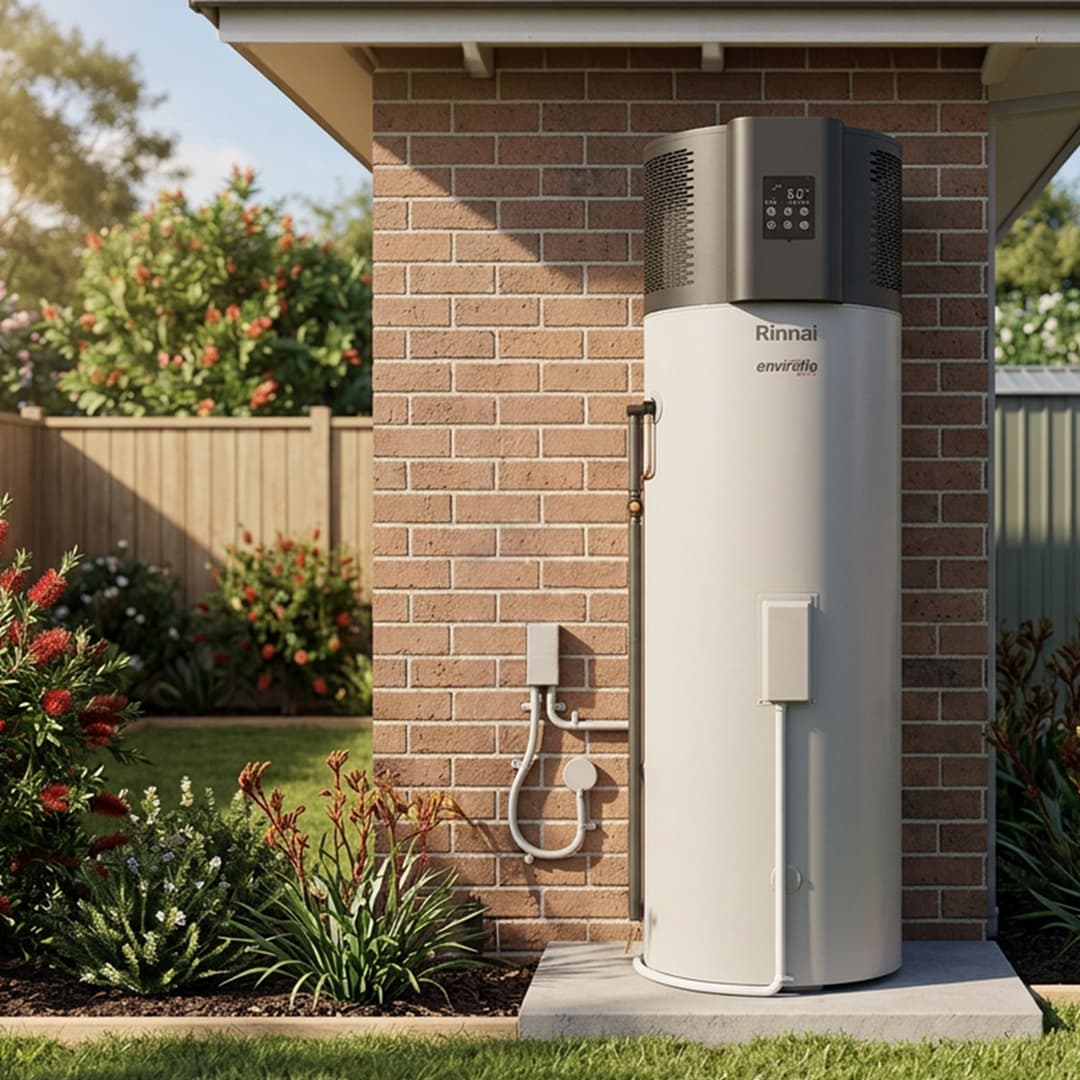
Why Choose a Rinnai Heat Pump?
Built for Australian conditions, Rinnai Enviroflo heat pumps feature high-efficiency R290 refrigerant, quiet operation from 45dB(A), and a range of capacities to suit different household sizes.