:format(webp))
Choosing the best hot water system for your home isn't a one-size-fits-all decision.
Factors such as household size, access to gas, energy costs, sustainability goals and upfront budget all play a role. Whether you're considering a gas continuous flow system, heat pump, solar hot water or a traditional storage tank, understanding the differences can help you make a more informed decision.
At Rinnai, we've been helping Australian households with reliable hot water solutions for more than 55 years, combining Japanese engineering expertise with innovative technologies designed for local conditions.
Gas Continuous Flow Hot Water Systems
Gas continuous flow systems heat water only when you need it. When a hot water tap is turned on, a flow sensor activates the heat exchanger, delivering hot water on demand without storing it in a tank.
Benefits
Endless hot water supply
Compact wall-mounted design
Lower standby energy losses
Long service life
Efficient operation for larger households
Things to Consider
Continuous flow systems must be sized correctly to accommodate simultaneous hot water demand.
Rinnai's Infinity range offers models suitable for everything from smaller homes to large households with multiple bathrooms.
BEST FOR: Families and homes with high hot water usage.
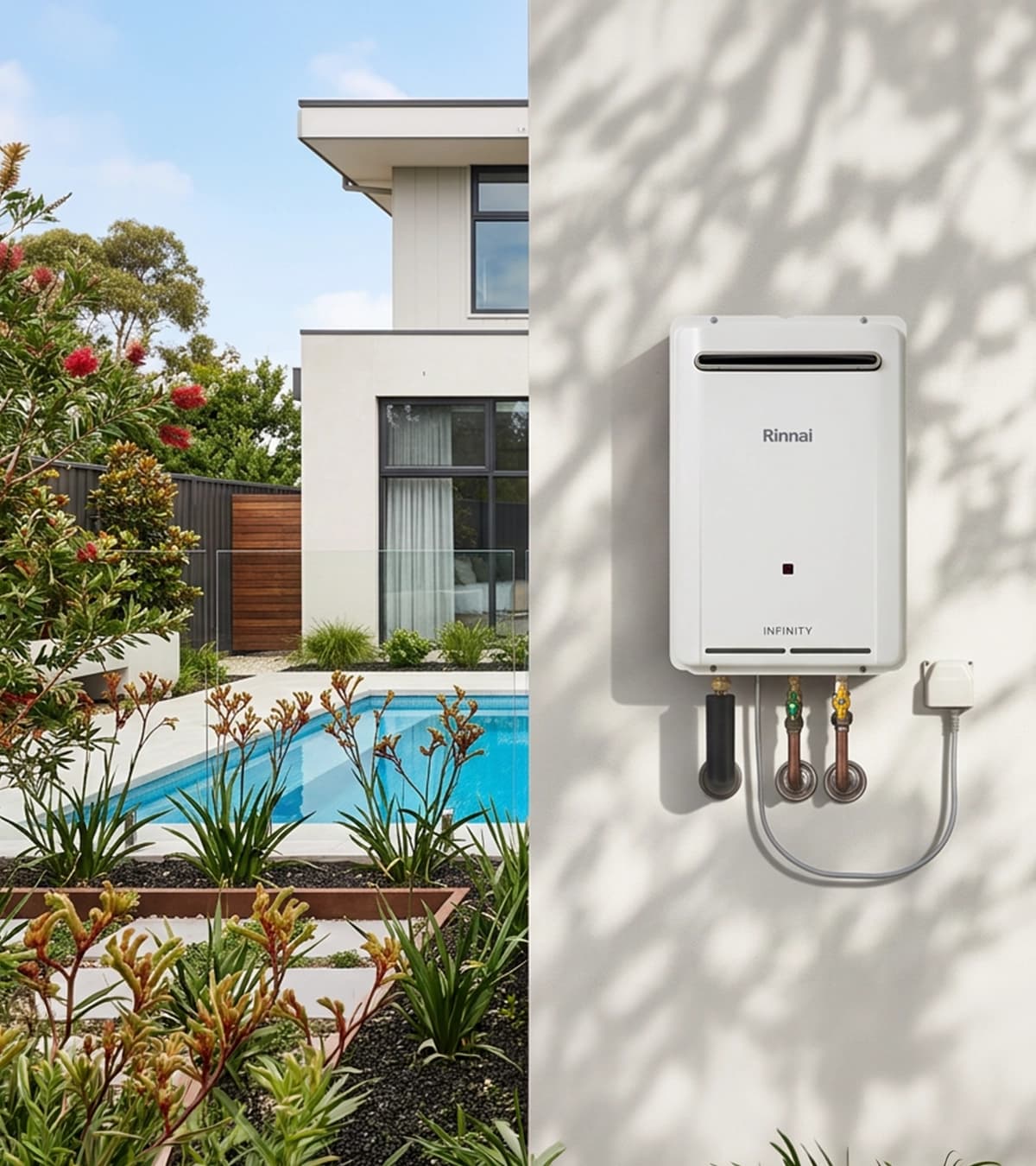
Electric Continuous Flow Hot Water Systems
Electric continuous flow systems work similarly to gas models but use electricity as their energy source. They're an ideal solution for homes without a gas connection or households transitioning to an all-electric future.
Benefits
Continuous hot water on demand
Compact installation
No storage tank required
Reduced standby heat losses
Things to Consider
These systems can draw significant electrical power during operation, so it's important to ensure your home's electrical infrastructure is suitable.
Rinnai's Efinity range delivers efficient, reliable hot water for modern all-electric homes.
BEST FOR: Homes without gas and new all-electric builds.
Heat Pump Hot Water Systems
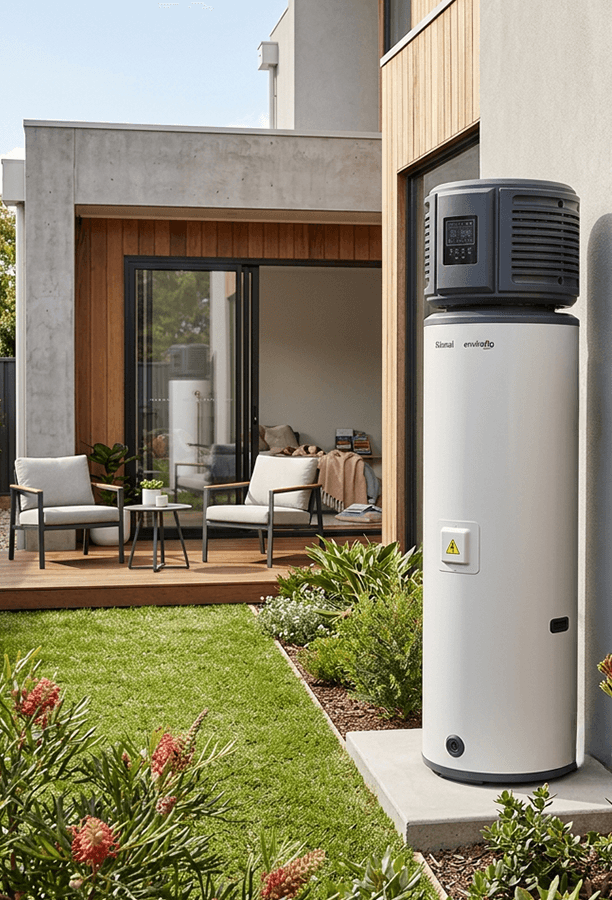
Heat pump hot water systems are among the most energy-efficient water heating solutions available. Rather than generating heat directly, they extract warmth from the surrounding air and transfer it into stored water using advanced refrigeration technology.
Many heat pumps can also work alongside rooftop solar, helping reduce reliance on grid electricity.
Benefits
Excellent energy efficiency
Lower running costs
Reduced carbon emissions
Compatible with solar PV systems
Eligible for rebates in many regions
Things to Consider
Heat pumps generally have a higher upfront cost than conventional electric storage systems, although long-term energy savings often offset the initial investment.
Rinnai's Enviroflo range is engineered to perform in Australian conditions and can operate in temperatures ranging as low as -10°C to as high as 45°C.
BEST FOR: Energy-conscious households and homes with solar power.
Storage Tank Hot Water Systems
Storage systems heat and hold a set volume of water in an insulated tank, ready for use whenever it's needed. They remain one of the most common hot water solutions across Australia.
Benefits
Lower upfront cost
Simple installation
Proven technology
Available in various capacities
Things to Consider
Because water is stored continuously, some heat loss occurs over time, resulting in higher running costs compared to heat pumps and continuous flow systems.
Selecting the correct tank size is essential to balance comfort and efficiency.
BEST FOR: Budget-conscious households and straightforward replacement installations.
Solar Hot Water Systems
Solar hot water systems use roof-mounted collectors to capture energy from the sun and heat water. Most systems include gas or electric boosting to ensure reliable hot water during periods of low sunlight.
Benefits
Very low running costs
Reduced energy consumption
Lower environmental impact
Long-term savings on energy bills
Eligible for Small-scale Technology Certificates (STCs)
Things to Consider
Solar hot water systems typically have higher installation costs, and performance can vary depending on climate, roof orientation and household usage patterns.
Rinnai's solar hot water systems combine renewable energy technology with reliable boosting for year-round comfort.
BEST FOR: Households looking to maximise renewable energy use and reduce energy bills.
Which Hot Water System Is Right for You?
The best hot water system depends on your household size, energy preferences, budget and long-term goals.
Lowest running costs: Solar Hot Water or Heat Pump
Highest energy efficiency: Heat Pump
Endless hot water: Gas or Electric Continuous Flow
Lowest upfront cost: Storage Tank
Best for all-electric homes: Heat Pump or Electric Continuous Flow
With more than 55 years of Australian experience and a complete range of hot water technologies, Rinnai can help you find a solution tailored to your home, lifestyle and sustainability goals.