:format(webp))
A compact, high-performance hot water system was required to maximise limited plant room space.
Background
The Star Gold Coast’s proposed $2 billion-plus transformation of Broadbeach Island includes provision for up to five new towers.
The first of these – Star Residences Tower 1 – was completed in 2022. Its 53 storeys comprise 423 residential apartments and the 316-room, 4.5-star Dorsett Gold Coast Hotel.
Following completion, the tower was affected by flooding caused by a burst fire main at high level. A significant refurbishment followed, completed in 2026.
Multi-residential developments and hotels both generate substantial hot water demand, often concentrated within peak periods. As projects of this nature increase in scale, the ability to anticipate and manage fluctuations in demand becomes increasingly important.
Challenge
The refurbishment presented an opportunity to reassess the tower's hot water infrastructure, with space within the plant room placing tight constraints on the system's physical footprint.
To ensure continuous hot water availability for both hotel guests and residents once the tower reopened, a compact system capable of providing a reliable supply and recovering quickly during peak usage periods was needed.
Solution
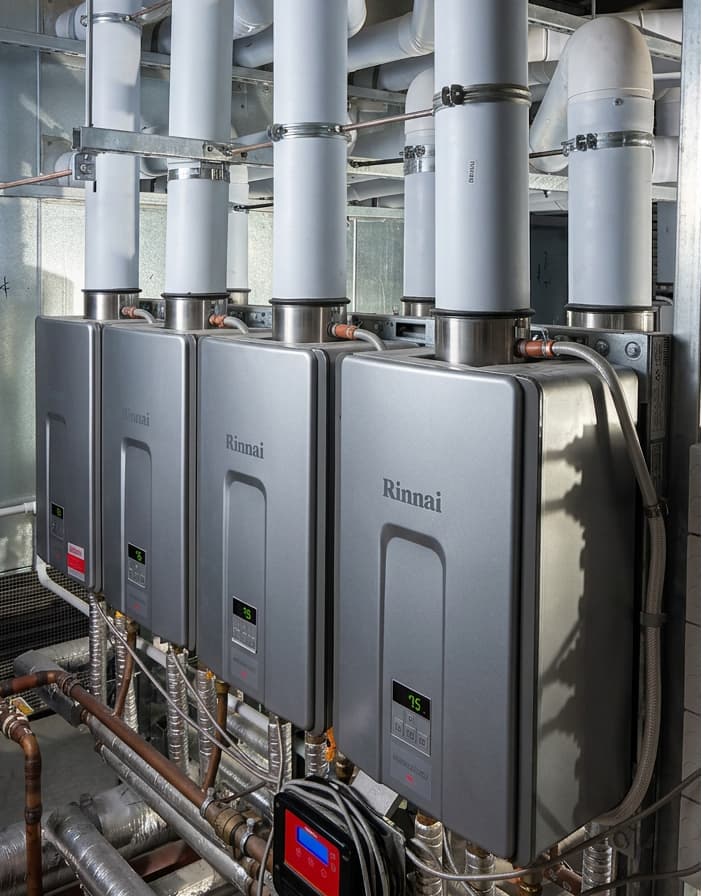
To meet peak demand while making efficient use of the limited plant-room space, four Rinnai Demand Duo systems consisting of heaters on Manifold's and tanks were connected to the building’s flow and return pipework as part of the refurbishment. Individual coaxial flues terminate within a plenum box incorporated into the building façade, allowing the installation to integrate neatly into the tower’s architecture.
Each Demand Duo combines Rinnai Heavy Duty Continuous Flow Water Heaters with a highly insulated storage tank. The tank provides stability during periods of concentrated demand, while the continuous flow units rapidly replenish stored hot water as it is used.
Rinnai’s gas systems have proven high hot water outputs all year round to comfortably meet the buildings unpredictable demands. The precise temperature control, fault detection and Building Management System connectivity support efficient, reliable operation.
Equipment redundancy is another benefit. The use of four independent systems reduces the building’s reliance on any single system, helping ensure hot water availability during maintenance or an unexpected outage.
Rinnai’s condensing technology also reduces gas consumption, contributing to lower running costs and improved energy efficiency.
By combining intelligent controls, high-efficiency condensing technology and built-in redundancy, Rinnai delivered a dependable hot water system tailored to the demands of large-scale residential and hotel accommodation.