:format(webp))
Rinnai's modular hot water solution provides energy efficiency, reduced operating costs, system redundancy and reliable supply across a large-scale mixed-use precinct.
Queens Wharf is one of Australia's largest mixed-use precincts, a multipurpose residential and entertainment development in Brisbane, comprising around 2,000 apartment lots, 1,100 hotel rooms and a casino alongside cafes, bars and restaurants.
Background
As one of the country's biggest mixed-use precincts, the project spans multiple towers each with very different hot water demand profiles, from short stay hotel guests to long term apartment residents. Built by Multiplex and completed in July 2024, the development demanded a hot water solution capable of comfortably covering the buildings' substantial and varied requirements, with high efficiency and proven reliability front of mind for the client.
Challenge
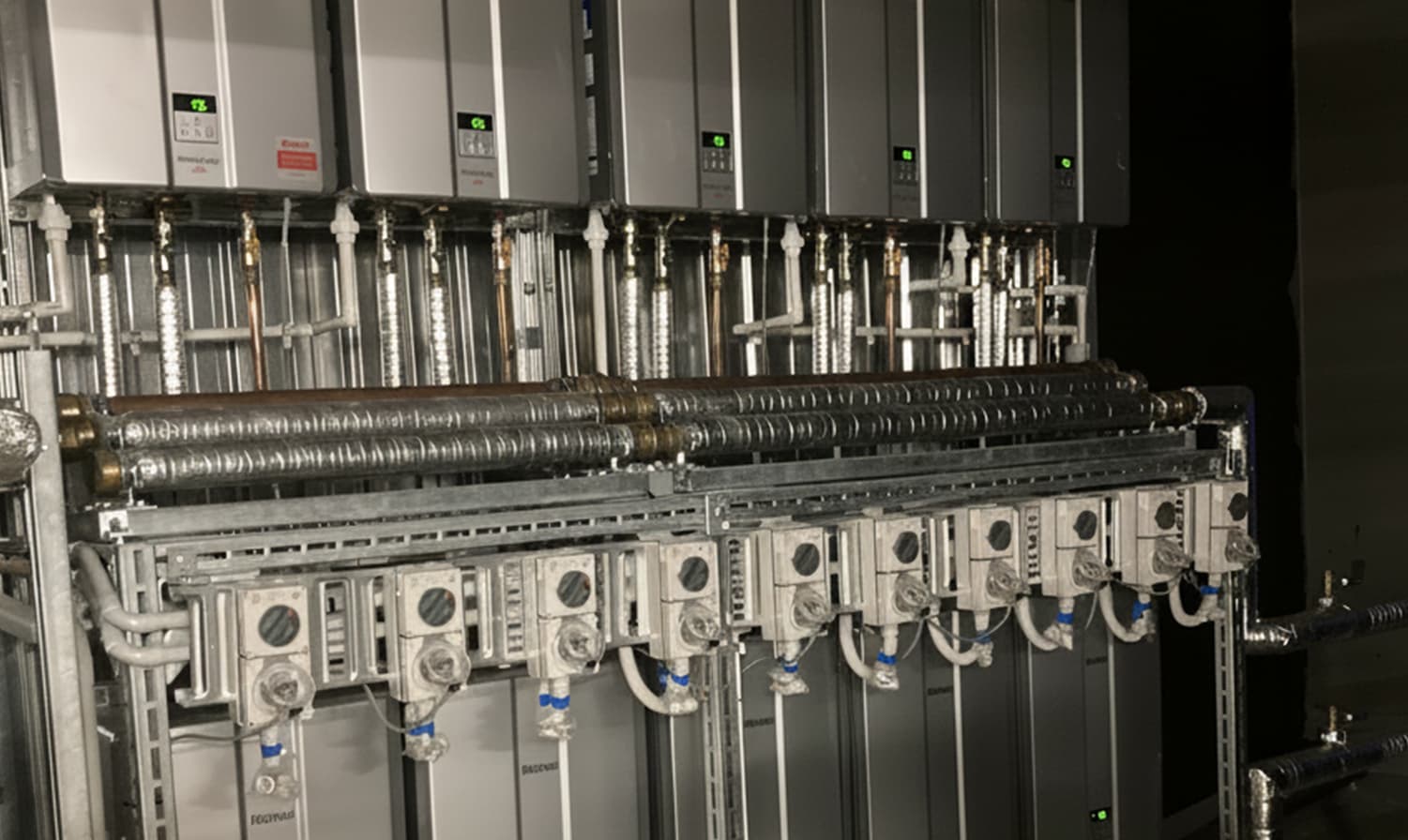
Space saving equipment, system redundancy and aesthetics were all critical factors in determining the right equipment specification, with the flues required to run behind the building's façade. This added a further layer of design complexity to achieve compliance. Every plant room across the development also needed a customised layout of its own, with the precinct's three towers requiring separate low, mid and high rise plant configurations to suit each building's height, size and pressure zone requirements. Coordinating a consistent hot water strategy across such varied plant room conditions meant each tower's system had to be individually engineered while still forming part of a cohesive overall solution.
Solution
Rinnai specified HD210 high efficiency condensing heaters, selected for their ongoing energy savings and modular design, which allowed the system to be configured in various formats to suit each tower's unique plant room requirements. Two Demand Duo 5 packages were installed on short frames with additional stainless steel storage tanks, with the heaters stacked on their frames to further reduce the equipment footprint within each plant room.
Outcome
This modular, space saving approach made for straightforward, efficient installation across a site with three very different plant room configurations. It also delivered significant ongoing energy efficiency and reduced running costs for the client, while the redundancy built into the system improved overall reliability and helped ensure hot water availability across the precinct's towers. The result was a solution that increased hot water capacity across the development, met the aesthetic and compliance requirements of the building facade, and supported Queens Wharf's broader sustainability outcomes.
Using HD210 high-efficiency condensing heaters and modular Demand Duo systems, Rinnai delivered a flexible, space-saving solution that increased hot water capacity, reduced energy consumption, improved reliability and met the complex design requirements of one of Australia's largest mixed-use developments.